
Description
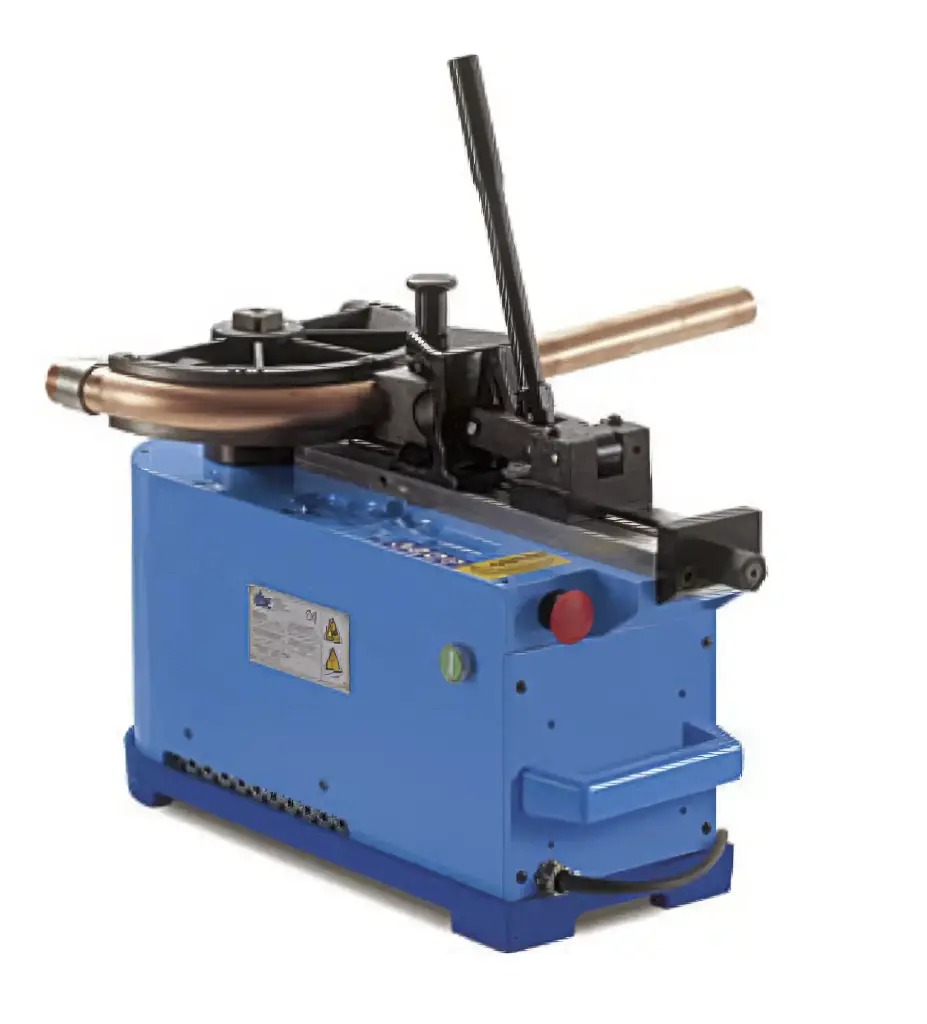
The UNI 60 bending machine family is a powerful and compact range of mobile pipe and tube bending machines designed for professional workshop use, installation work and industrial applications. Built for accurate bending of medium to large pipe diameters, the UNI 60 series combines a robust aluminium body, strong electric drive technology and precise bending angle control to achieve constant bending radii and clean bending results.
The UNI 60 family is especially suitable for users who need a reliable bending machine for demanding materials and larger tube dimensions while maintaining high bending accuracy. It can be used for hard and soft copper pipes, annealed brass pipes, steel pipes for electrical installations, stainless steel pipes, hydraulic steel tubes, furniture tubes, boiler tubes, aluminium pipes, gas pipes and double-coated aluminium pipes. Depending on the material and wall thickness, the machine enables precise bending without the need for a mandrel in many standard applications.
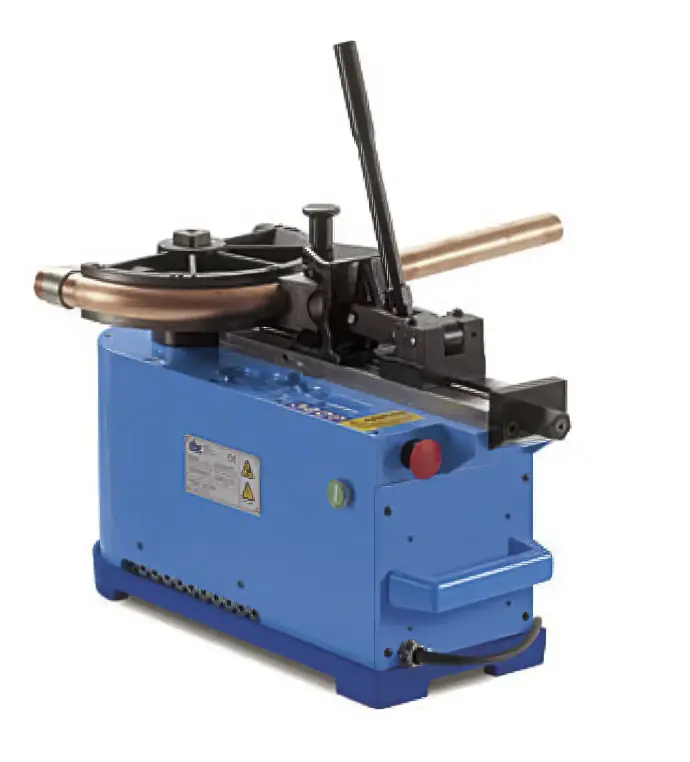
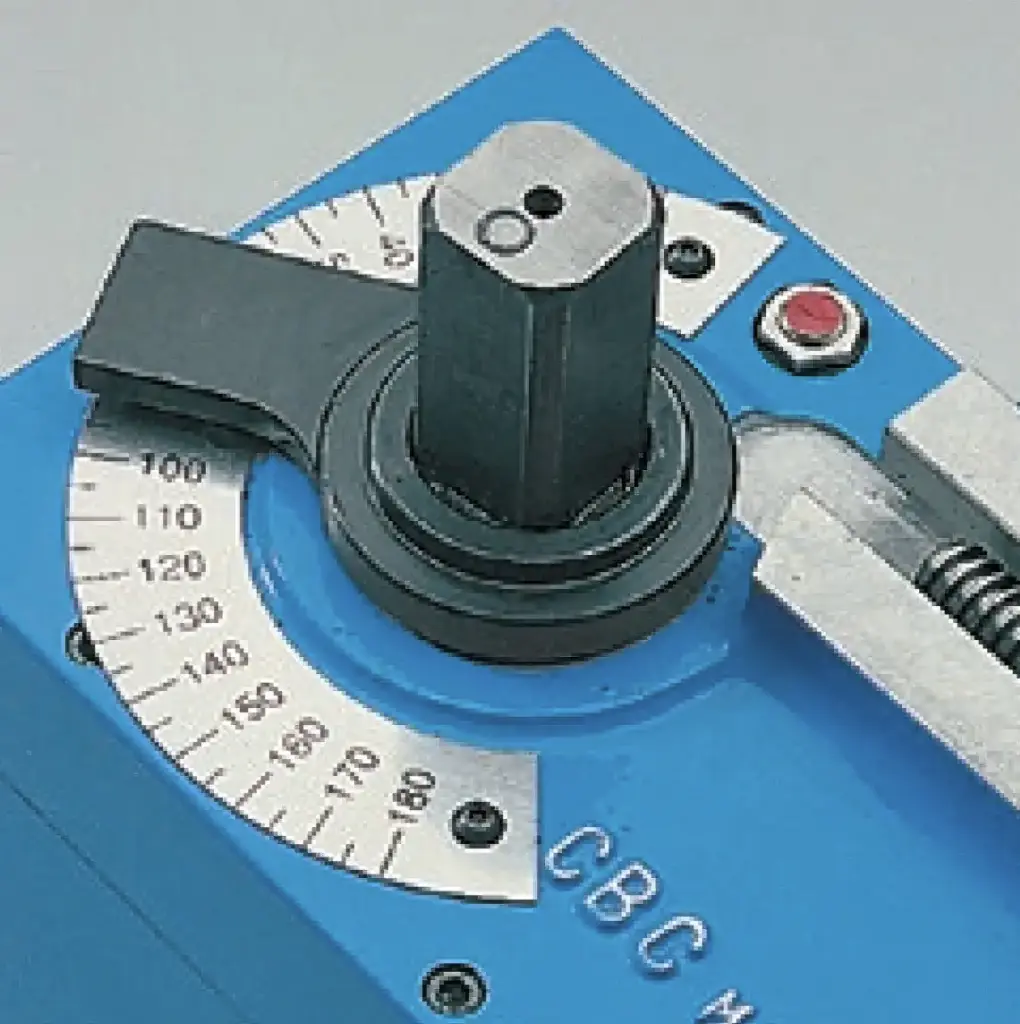
The UNI 60 electric version is a strong single-phase electric pipe bending machine for professional daily use. It is equipped with an asynchronous 1.30 HP motor, low-voltage electronic control, bending angle regulation, electrobrake and automatic return at the end of the bending stroke. This version is ideal for users who need powerful, repeatable and efficient bending performance with a straightforward electric control system.
Electric UNI 60 length: 580 mm/ 22,84 in, width: 210 mm/ 8,27 in, height: 410 mm/ 16,15 in (without stand)
Electric UNI 60 weight: 60 kg/132,3 lb (without stand)
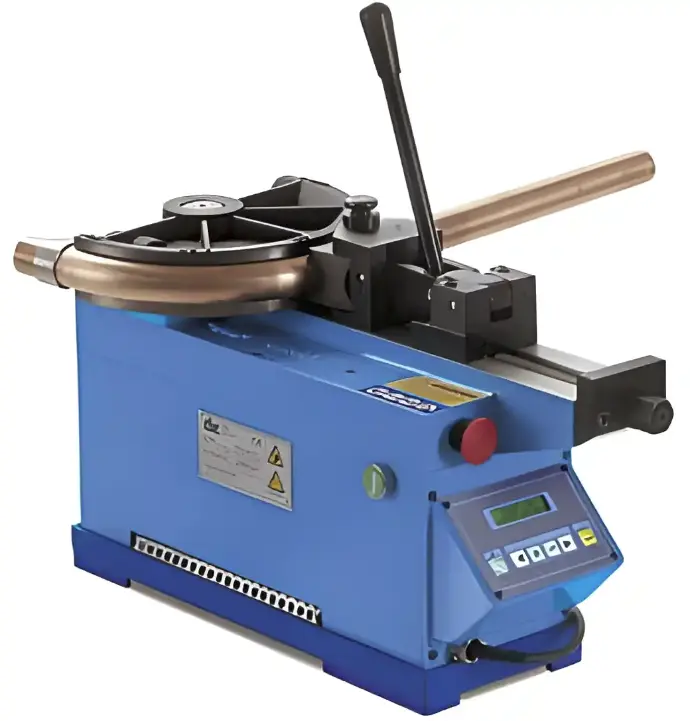
For higher repeatability and more advanced bending tasks, the digital UNI 60 offers a digital electronic control unit with multilingual microprocessor. This system allows the operator to program, control and recover the bending angle accurately. The machine can store up to 50 bending programs, with the possibility to select up to 9 sequential bending angles for each program. This makes the digital version particularly suitable for recurring bending jobs, small series production and tube geometries that require consistent angular precision.
Digital-electric UNI 60 length: 580 mm/ 22,84 in, width: 210 mm/ 8,27 in, height: 410 mm/ 16,15 in (without stand)
Digital-electric UNI 60 weight: 60 kg/132,3 lb (without stand)
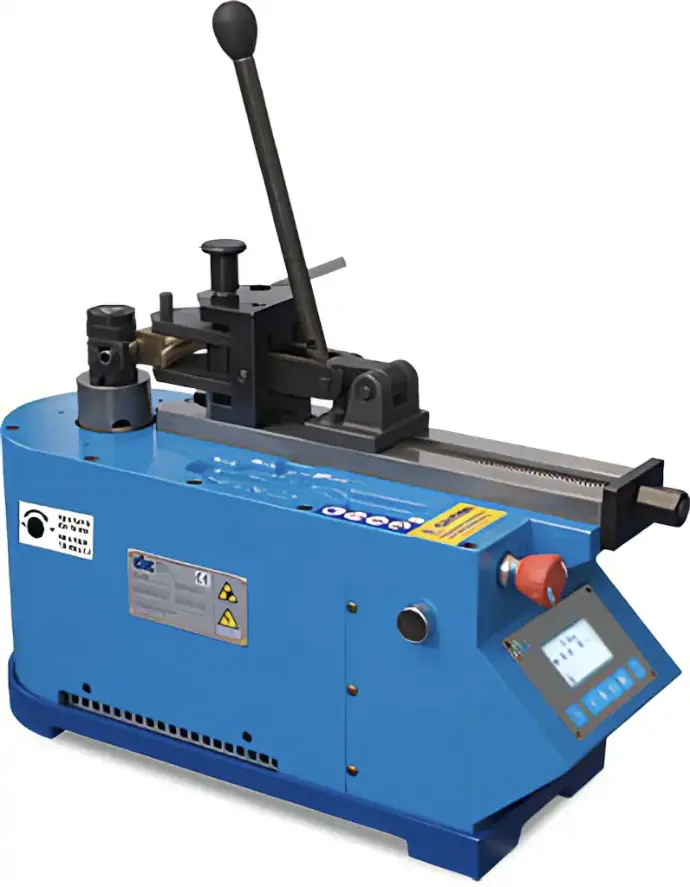
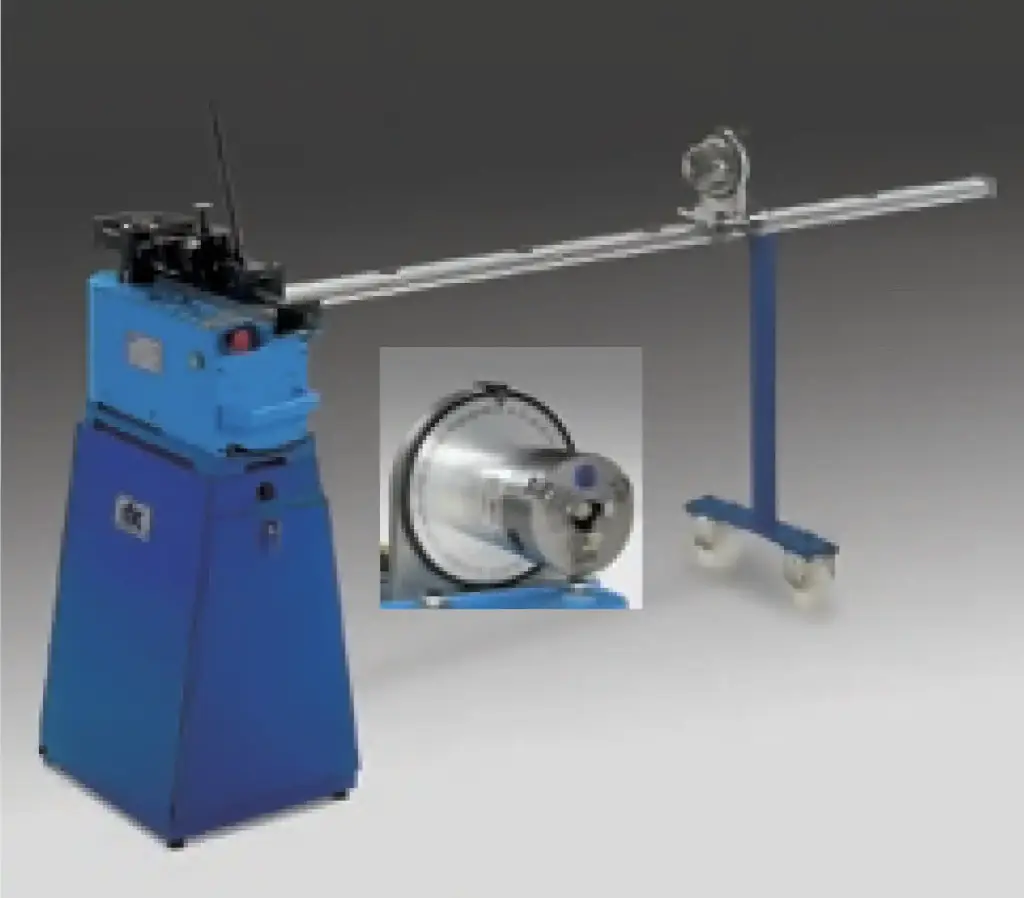
The UNI 60 digital version with interchangable outlet shaft expands the family with an interchangeable outlet shaft system. This version is designed for bending thin, delicate and demanding pipes, especially when very tight bending radii are required. With interchangeable shafts and quick guide positioning, this UNI 60 is suitable for applications where standard bending configurations are not sufficient and where special radii below 30 mm may be required.
Digital with interchangable outlet shaft UNI 60 length: 580 mm/ 22,84 in, width: 210 mm/ 8,27 in, height: 410 mm/ 16,15 in (without stand)
Digital with interchangable outlet shaft UNI 60 weight: 60 kg/132,3 lb (without stand)
All UNI 60 versions are designed with a compact aluminium body and practical machine dimensions, making them suitable for flexible use in workshops and mobile installation environments. With a machine weight of approximately 60 kg without stand, the UNI 60 is not a hand-carried tool, but a transportable and space-saving bending machine for professional use.
The UNI 60 series is a strong choice for companies looking for a compact electric pipe bending machine with high bending power, accurate angle control and reliable repeatability. Whether used in the standard electric version, the programmable digital version or the AI version with interchangeable shaft system, the UNI 60 family provides a precise and durable solution for professional tube and pipe forming.
Bending Capacity
The bending capacity for the UNI 42 familiy depends on the combination of the pipe's material, outside diameter and wall thickness. Softer materials and smaller diameters can usually be bent using less machine force, whereas high-strength steels, larger diameters and thicker walls require more robust tooling and higher torque. The achievable bending result also depends on the bending radius, the quality of the pipe and the use of suitable bending formers, counter rollers or mandrels. Therefore, capacity values should always be checked against the exact material grade, pipe size, and required bend geometry.
The maximal bending angle is 180°.
The standard bending radii are 3D and 4D.
Hard and Soft Copper Pipes, Annealed Brass Pipes
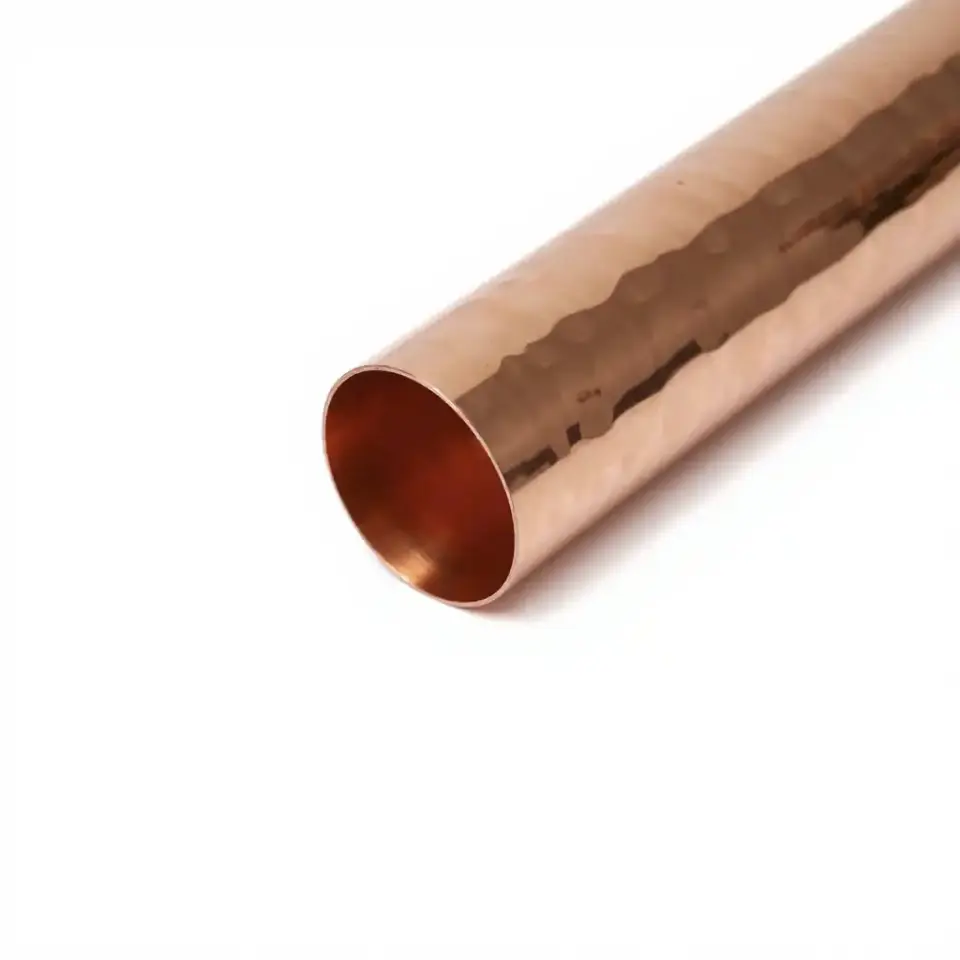
Hard and Soft Copper Pipes or Annealed Brass Pipes are especially suitable for bending applications because their soft, ductile material structure allows clean forming with reduced risk of cracking. Compared with harder pipe materials, annealed copper can usually be bent with lower force and tighter radii, depending on the pipe diameter, wall thickness and tooling used. For best results, the bending former should match the pipe size precisely to prevent flattening, wrinkling or deformation of the pipe cross-section. The actual bending capacity always depends on the specific copper grade, pipe dimensions and required bend geometry.
Maximal Diameter
The maximum pipe diameter describes the largest outside diameter a bending machine can process under defined conditions.
The maximal diameter for hard and soft copper pipes or annealed brass pipes is 54 mm/2,12598 in.
Maximal Wall Thickness
The maximum wall thickness indicates the thickest pipe wall a bending machine can form within its rated capacity.
The maximal wall thickness for hard and soft copper pipes or annealed brass pipes is 4 mm/0,15748 in.
Steel pipes for electrical installations
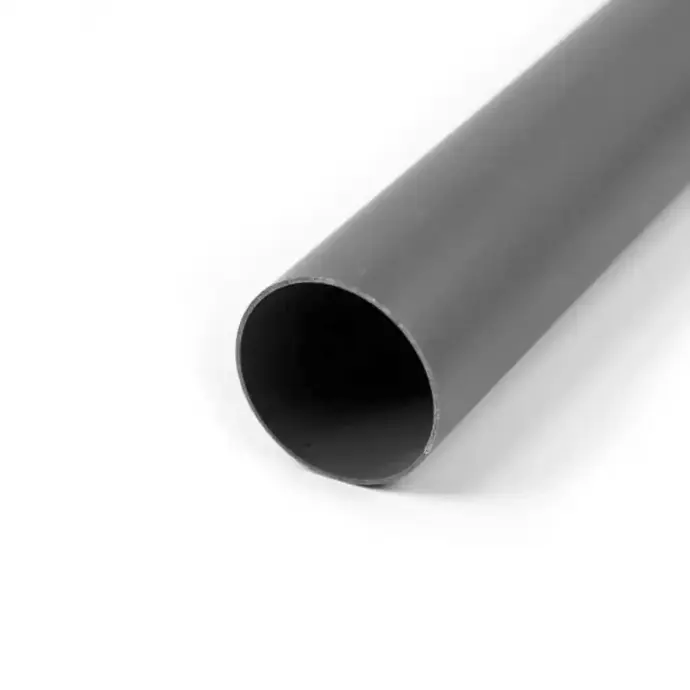
Steel pipes for electrical installations are commonly used where cables and wiring require strong mechanical protection. Due to their higher strength compared with softer pipe materials, they usually require greater bending force and accurately matched tooling to achieve clean, consistent bends. The bending result depends on the outside diameter, wall thickness, steel grade and protective surface finish, such as galvanising or coating. Properly selected bending formers help prevent flattening, kinking or damage to the pipe surface, ensuring that the conduit remains suitable for safe and reliable cable routing.
Maximal Diameter
The maximum pipe diameter describes the largest outside diameter a bending machine can process under defined conditions.
The maximal diameter for steel pipes is 50 mm/1,9685 in.
Maximal Wall Thickness
The maximum wall thickness indicates the thickest pipe wall a bending machine can form within its rated capacity.
The maximal wall thickness for steel pipes is 2 mm/0,0787402 in.
Stainless Steel AISI 304/316 Pipes
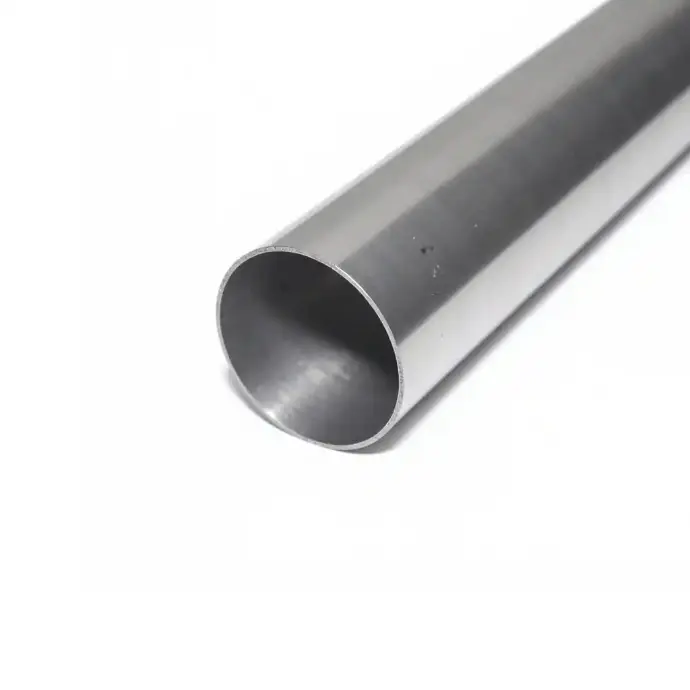
Stainless steel AISI 304 and 316 pipes are used where high corrosion resistance, durability and a clean surface finish are required. Due to their strength and work-hardening behaviour, these materials place higher demands on the bending machine, tooling and bending process than softer metals. The achievable bending capacity depends on the outside diameter, wall thickness, material grade and required bending radius. Precisely matched bending formers and suitable counter supports are essential to reduce ovalisation, surface marking and deformation, especially when tight radii or visible-quality bends are required.
Maximal Diameter
The maximum pipe diameter describes the largest outside diameter a bending machine can process under defined conditions.
The maximal diameter for stainless steel pipes is 35 mm/1,37795 in.
Maximal Wall Thickness
The maximum wall thickness indicates the thickest pipe wall a bending machine can form within its rated capacity.
The maximal wall thickness for stainless steel pipes is 3 mm/0,11811 in.
Hydraulic Steel Pipes ST. 35,4
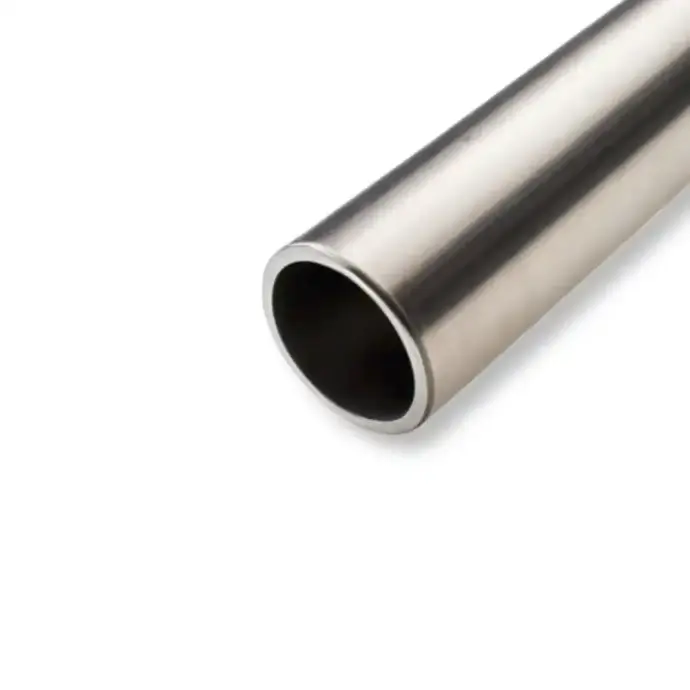
Hydraulic steel tubes ST 35.4 are designed for demanding hydraulic and fluid power applications where dimensional accuracy, pressure resistance and reliable forming behaviour are important. Their material strength and wall thickness require sufficient bending force and precisely matched tooling to produce clean bends without kinking, flattening or excessive ovalisation. The achievable bending capacity depends on the tube diameter, wall thickness, material condition and required bending radius. For hydraulic lines, careful bending is especially important to maintain the internal cross-section and ensure safe, consistent flow performance.
Maximal Diameter
The maximum pipe diameter describes the largest outside diameter a bending machine can process under defined conditions.
The maximal diameter for hydraulic steel pipes ST. 35,4 is 54 mm/2,12598 in.
Maximal Wall Thickness
The maximum wall thickness indicates the thickest pipe wall a bending machine can form within its rated capacity.
The maximal wall thickness for hydraulic steel pipes ST. 35,4 is 4 mm/0,15748 in.
Furniture Tubes
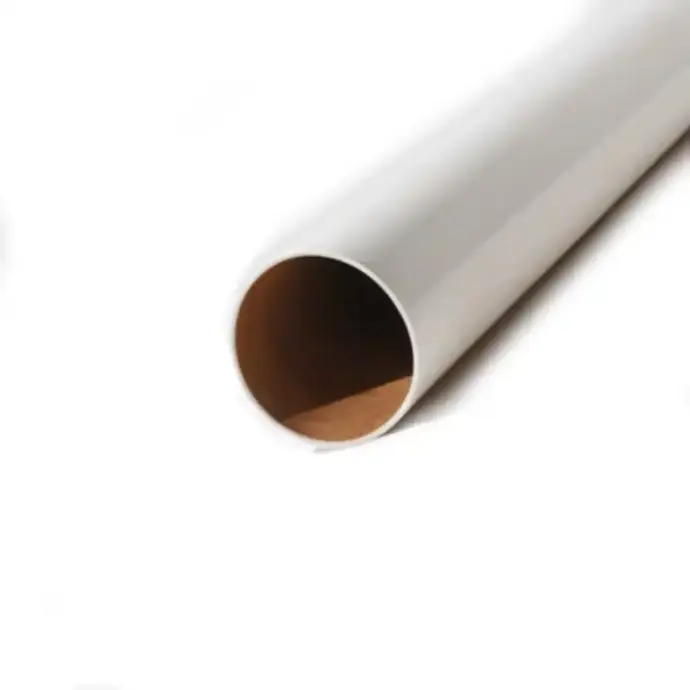
Furniture tubes are used in visible structural and design applications where precise bends, clean surfaces and consistent geometry are especially important. Depending on the material, diameter and wall thickness, they can be formed into frames, supports, handles or decorative elements for furniture and interior fittings. Suitable bending tools are essential to avoid surface marks, flattening, wrinkles or deformation of the tube cross-section. The achievable bending capacity depends on the tube dimensions, material grade, surface finish and required bend radius, particularly when high visual quality is required.
Maximal Diameter
The maximum pipe diameter describes the largest outside diameter a bending machine can process under defined conditions.
The maximal diameter for furniture pipes is 54 mm/2,12598 in.
Maximal Wall Thickness
The maximum wall thickness indicates the thickest pipe wall a bending machine can form within its rated capacity.
The maximal wall thickness for furniture pipes is 3 mm/0,11811 in.
FE Boiler Pipes
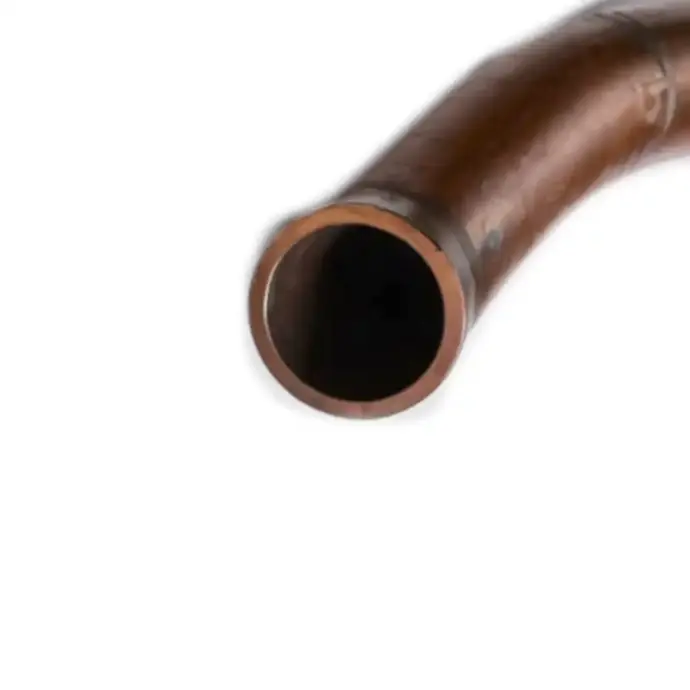
FE boiler pipes are used in heating, boiler and thermal systems where reliable performance under temperature and pressure is essential. Due to their steel-based material properties, they require sufficient bending force and accurately matched tooling to achieve controlled bends without kinking, flattening or weakening the pipe structure. The bending capacity depends on the outside diameter, wall thickness, steel grade and required bending radius. Clean, precise bending is especially important for boiler pipework to maintain flow reliability, installation accuracy and long-term operational safety.
Maximal Diameter
The maximum pipe diameter describes the largest outside diameter a bending machine can process under defined conditions.
The maximal diameter for FE boiler pipes is 54 mm/2,12598 in.
Maximal Wall Thickness
The maximum wall thickness indicates the thickest pipe wall a bending machine can form within its rated capacity.
The maximal wall thickness for FE boiler pipes is 4 mm/0,15748 in.
Aluminium Pipes
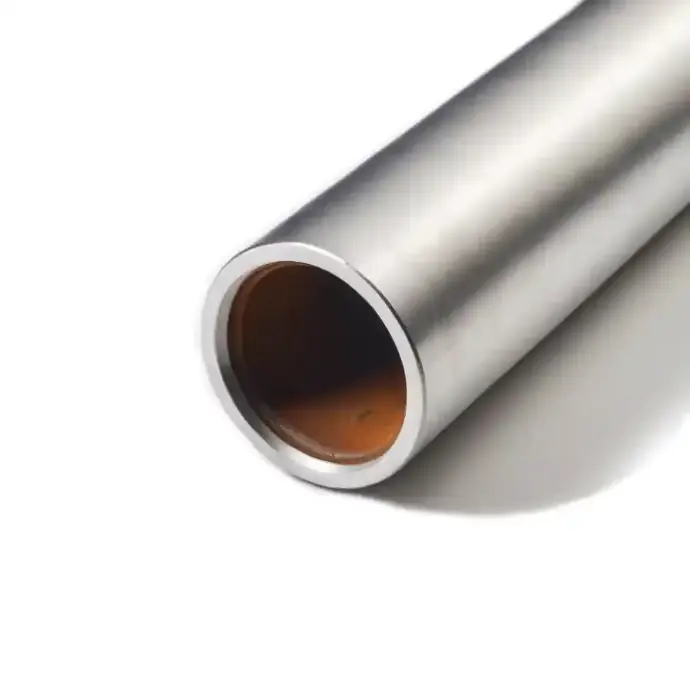
Aluminium pipes are lightweight, corrosion-resistant and well suited for many bending applications where low weight and clean forming results are important. Compared with steel, aluminium generally requires less bending force, but it can be sensitive to surface marks, flattening and cracking if the tooling or bending radius is not properly selected. The achievable bending capacity depends on the aluminium grade, outside diameter, wall thickness and required bend geometry. Precisely matched bending formers and careful process setup help maintain the pipe shape and produce smooth, consistent bends.
Maximal Diameter
The maximum pipe diameter describes the largest outside diameter a bending machine can process under defined conditions.
The maximal diameter for aluminium pipes is 54 mm/2,12598 in.
Maximal Wall Thickness
The maximum wall thickness indicates the thickest pipe wall a bending machine can form within its rated capacity.
The maximal wall thickness for aluminium pipes is 5 mm/0,19685 in.
Gas Pipes UNI 5745
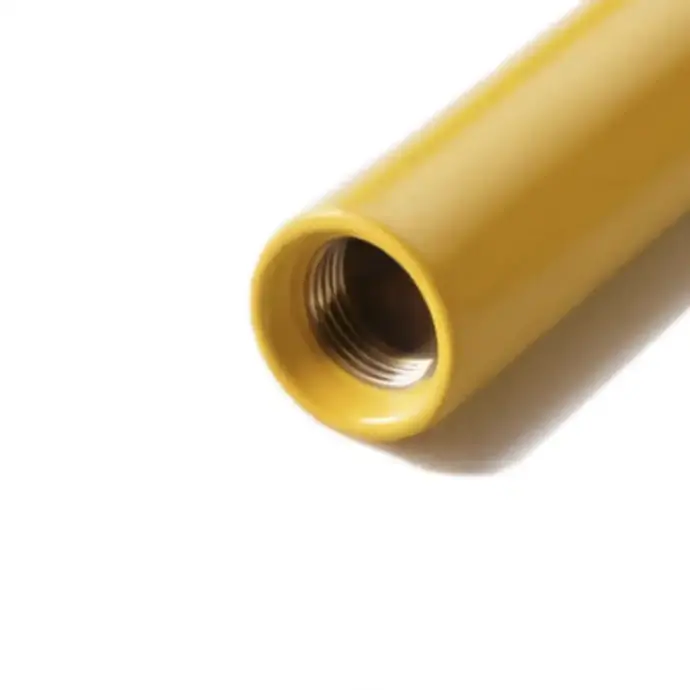
Gas pipes UNI 5745 are used for gas installation applications where reliable dimensional accuracy, safe forming behaviour and a clean internal cross-section are essential. Due to the functional requirements of gas lines, the bending process must avoid kinking, flattening or excessive ovalisation that could restrict flow or affect installation quality. The achievable bending capacity depends on the pipe diameter, wall thickness, material grade and required bending radius. Properly matched bending formers and careful machine setup help ensure consistent bends while maintaining the integrity and usability of the pipe.
Maximal Diameter
The maximum pipe diameter describes the largest outside diameter a bending machine can process under defined conditions.
The maximal diameter for gas pipes UNI 5745 is 1"1/2.
Maximal Wall Thickness
The maximum wall thickness indicates the thickest pipe wall a bending machine can form within its rated capacity.
The maximal wall thickness for gas pipes UNI 5745 is standard.
Double Coated Aluminium Pipes for Sanitary Use
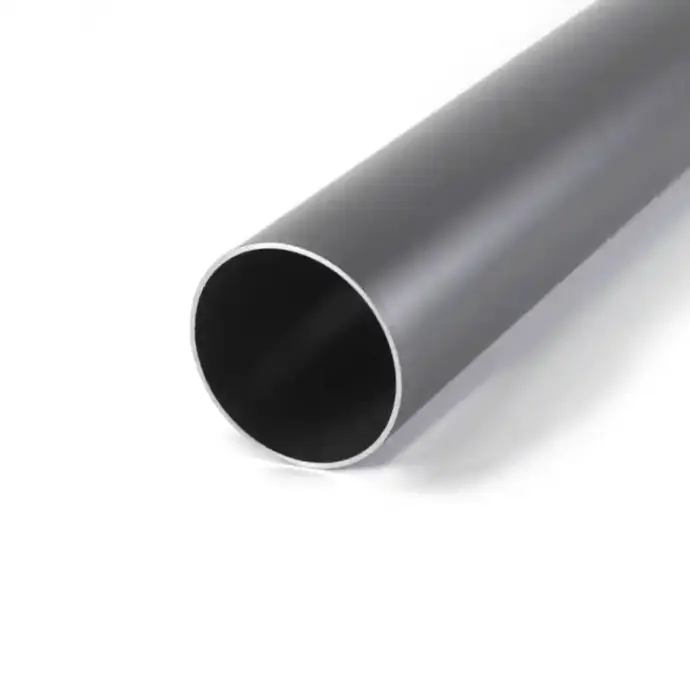
Bending double coated aluminium pipes require careful handling during bending because both the pipe material and the protective surface layers must remain intact. Aluminium is generally lightweight and formable, but the achievable bending result depends strongly on the pipe diameter, wall thickness, coating structure and bending radius. Suitable bending formers and clean tooling are especially important to avoid surface marks, coating damage, ovalisation or wrinkles. For reliable results, the bending capacity should always be checked according to the exact pipe dimensions, aluminium grade, coating type and required bend geometry.
Maximal Diameter
The maximum pipe diameter describes the largest outside diameter a bending machine can process under defined conditions.
The maximal diameter for double coated aluminium pipes for sanitary use is 63 mm/2,48031 in.
Maximal Wall Thickness
The maximum wall thickness indicates the thickest pipe wall a bending machine can form within its rated capacity.
The maximal wall thickness for double coated aluminium pipes for sanitary use is standard.
Accessories